| |
ID |
Date |
Author |
Subject |
|
|
20
|
Mon Mar 2 13:22:52 2026 |
FG,SB,CLW | Run 55 |
start: 10:14:0531 2.3.26
stop: 12:57:08 2.3.26
blocks: 3855
NaCl No. 4 |
|
|
21
|
Mon Mar 2 13:24:11 2026 |
FG,SB,CLW | Run 56 |
start: 13:28:38, 2.3.2026
stop:  15:05:22, 2.3.2026
blocks:   2206
LiF no. 7 in beam |
|
|
23
|
Tue Mar 3 08:24:06 2026 |
FG,SB,CLW | Run 57 |
Start: 15:45:30, 2.3. 2026
Stop: 07:57:05 3.3. 2026
Blocks: 25524
Flux monitor
Start: 16:41:41 of 2nd March
Duration: 58288
NaCl Target 5 |
|
|
24
|
Tue Mar 3 08:25:45 2026 |
FG,SB,CLW | Run 58 |
start: 08:24:49, 3.3.2026
stop: 10:13:25
blocks: 3062
Flux monitor
Start: 09:20:43
Duration: 6531
LiF no. 7 in beam |
|
|
33
|
Fri Mar 13 15:50:54 2026 |
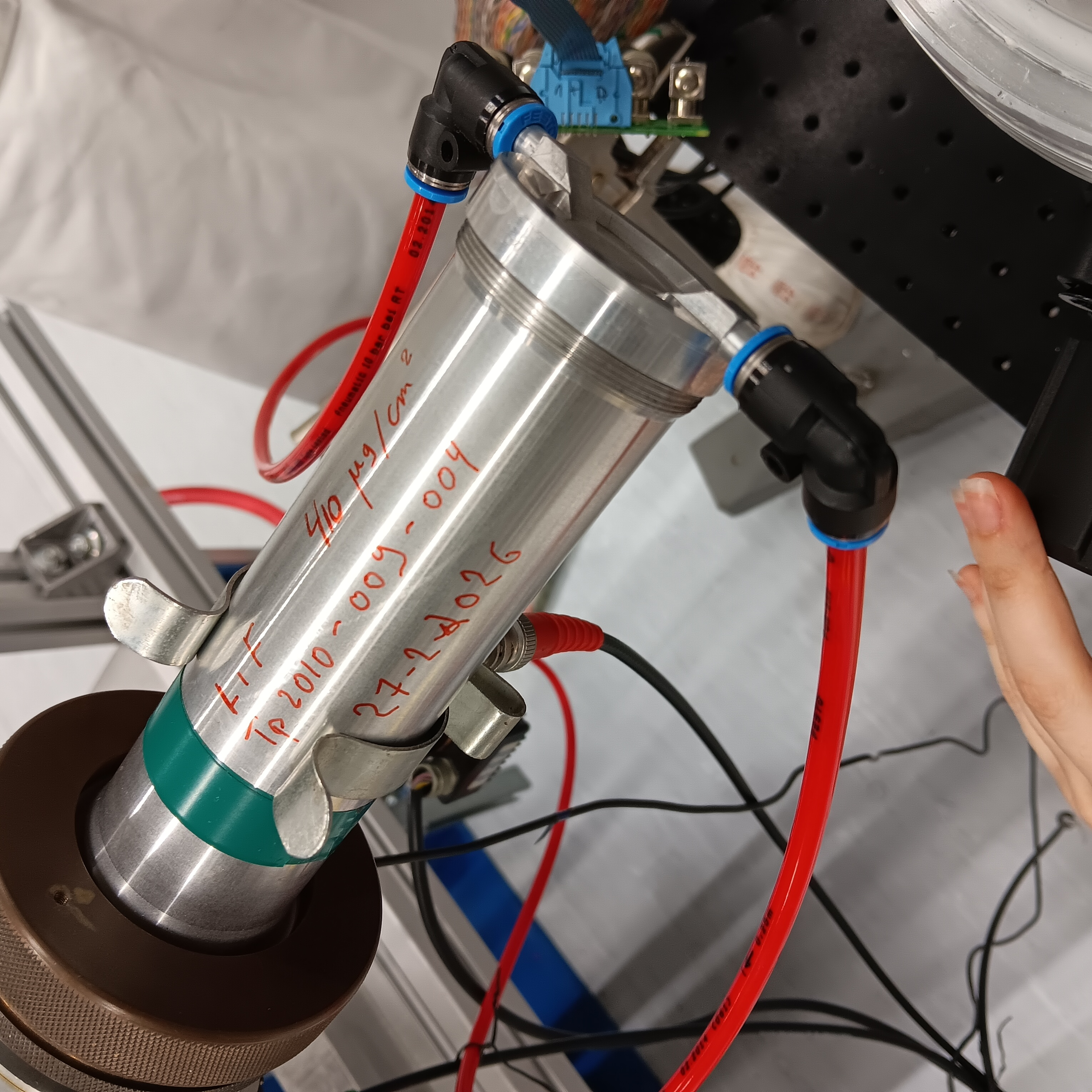
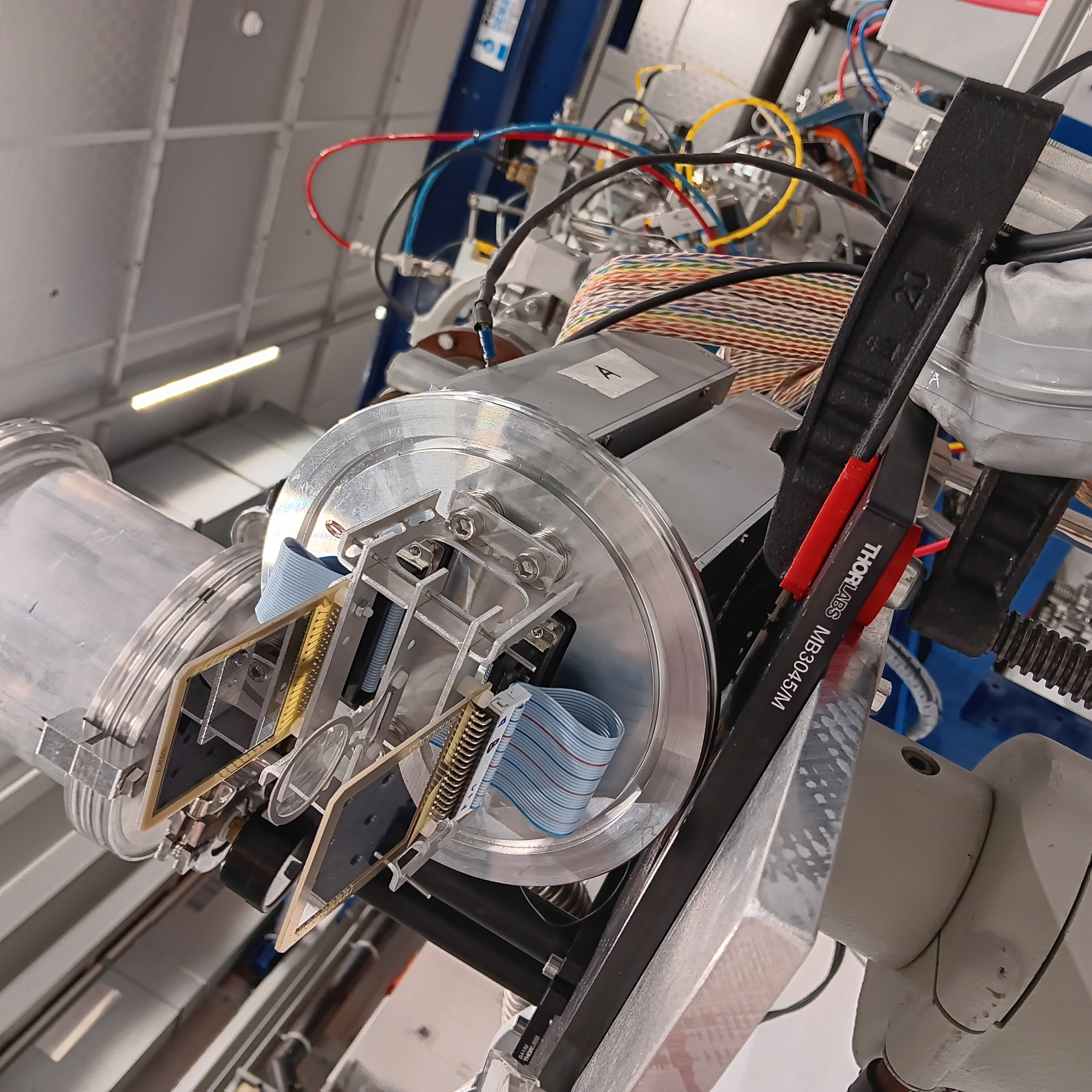
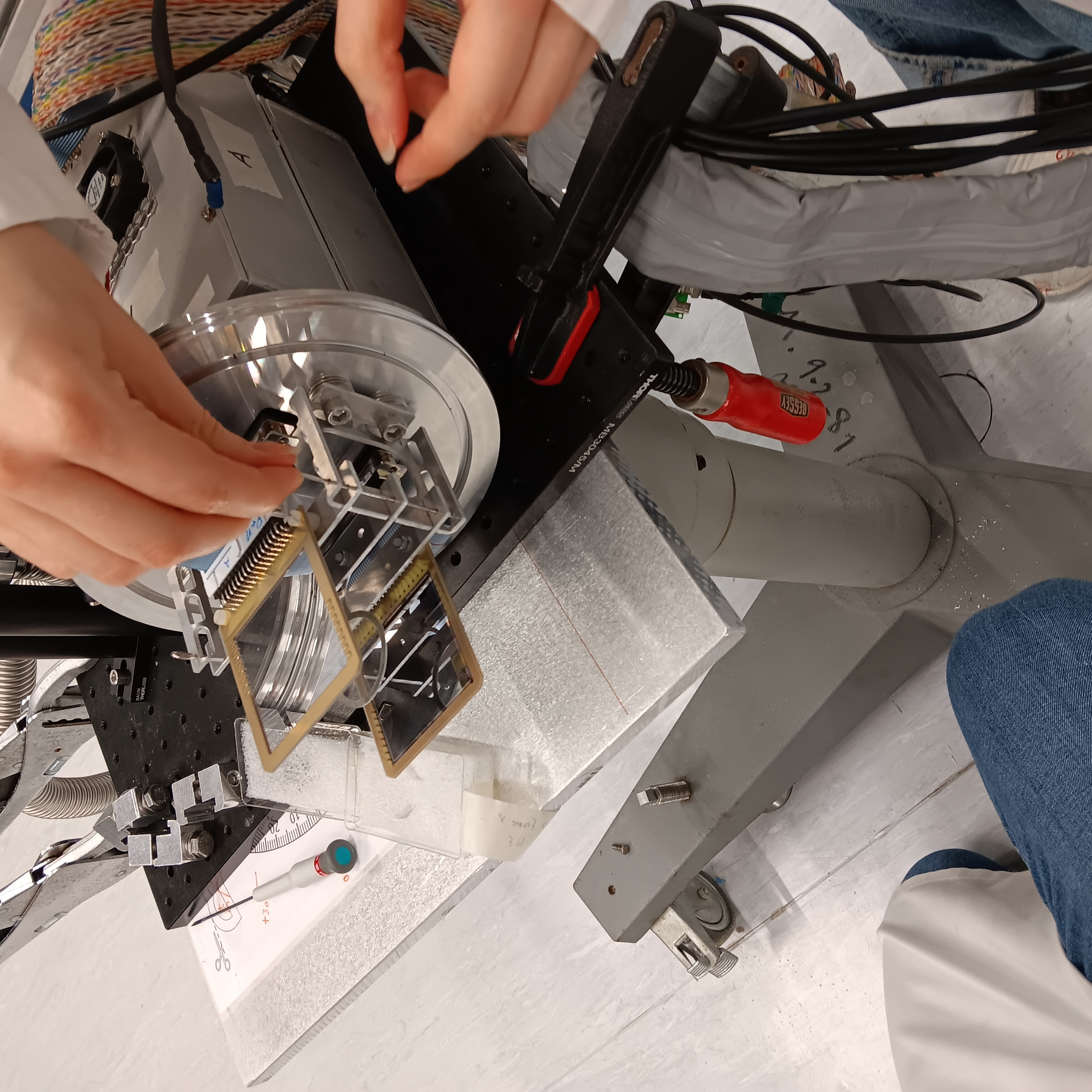
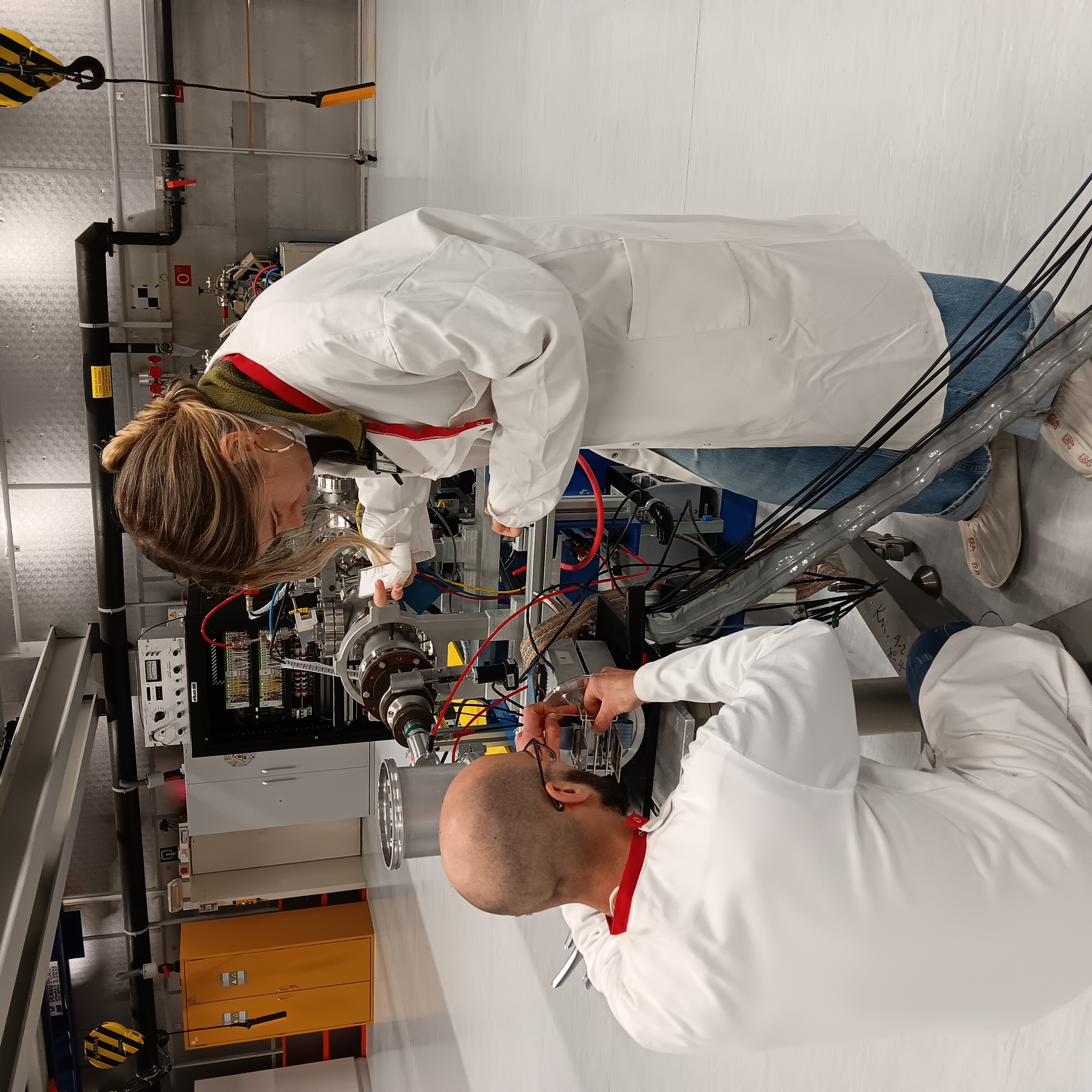
Clw | Photos |
|
| Attachment 1: 20260303_091317.jpg
|
|
| Attachment 2: 20260303_090934.jpg
|
|
| Attachment 3: 20260303_090926.jpg
|
|
| Attachment 4: 20260303_090616.jpg
|
|
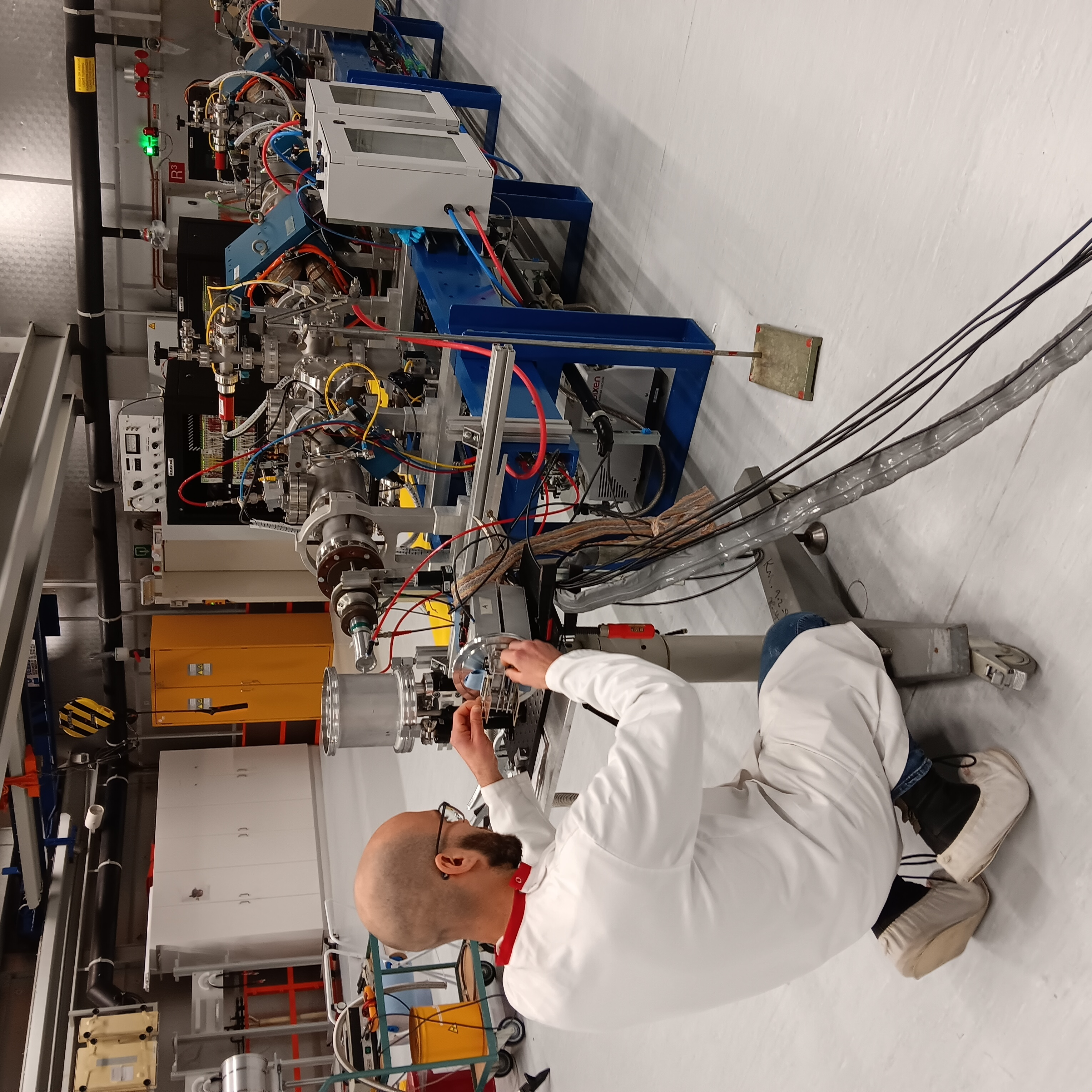
| Attachment 5: 20260303_090604.jpg
|
|
| Attachment 6: 20260303_090450.jpg
|
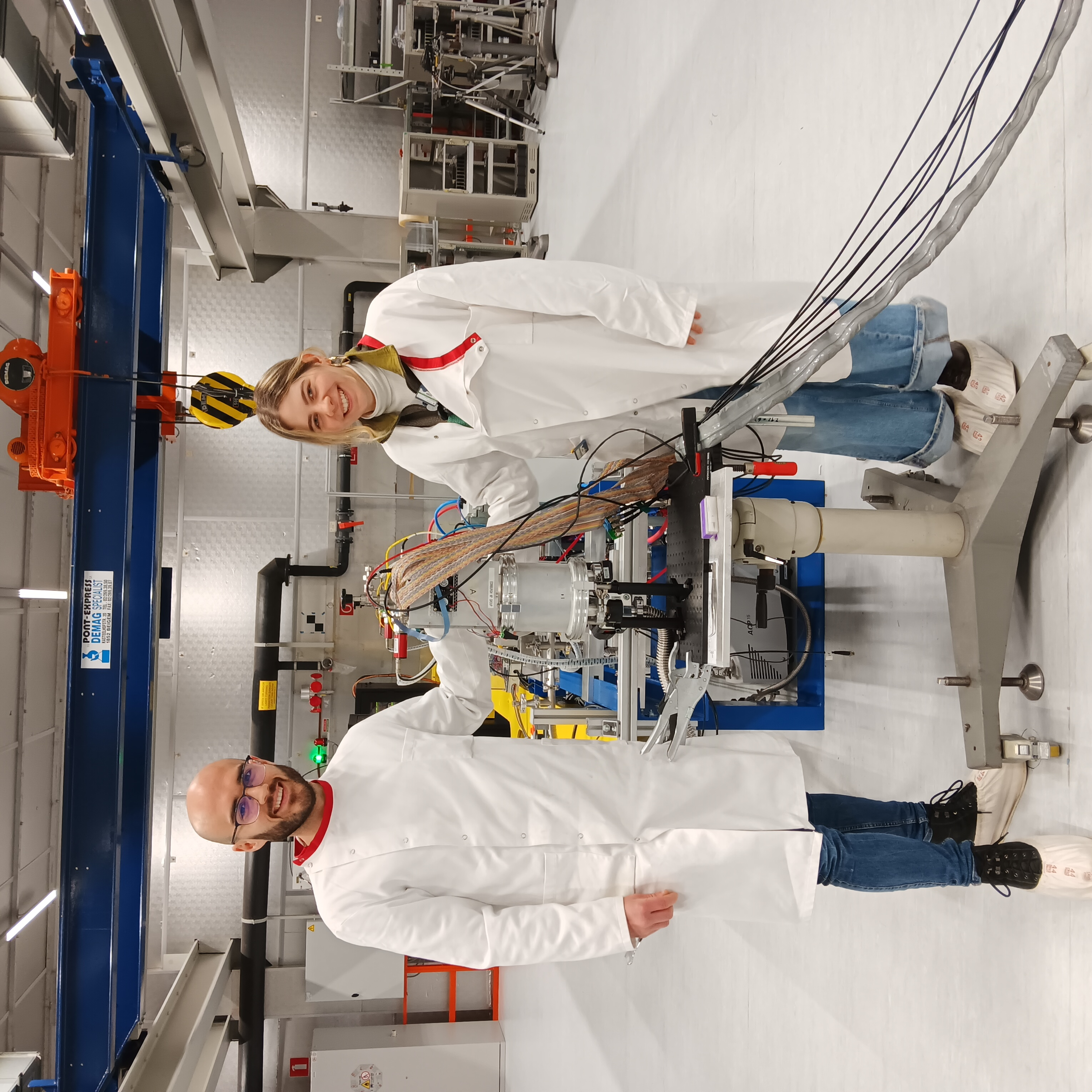
|
| Attachment 7: 20260303_090503.jpg
|
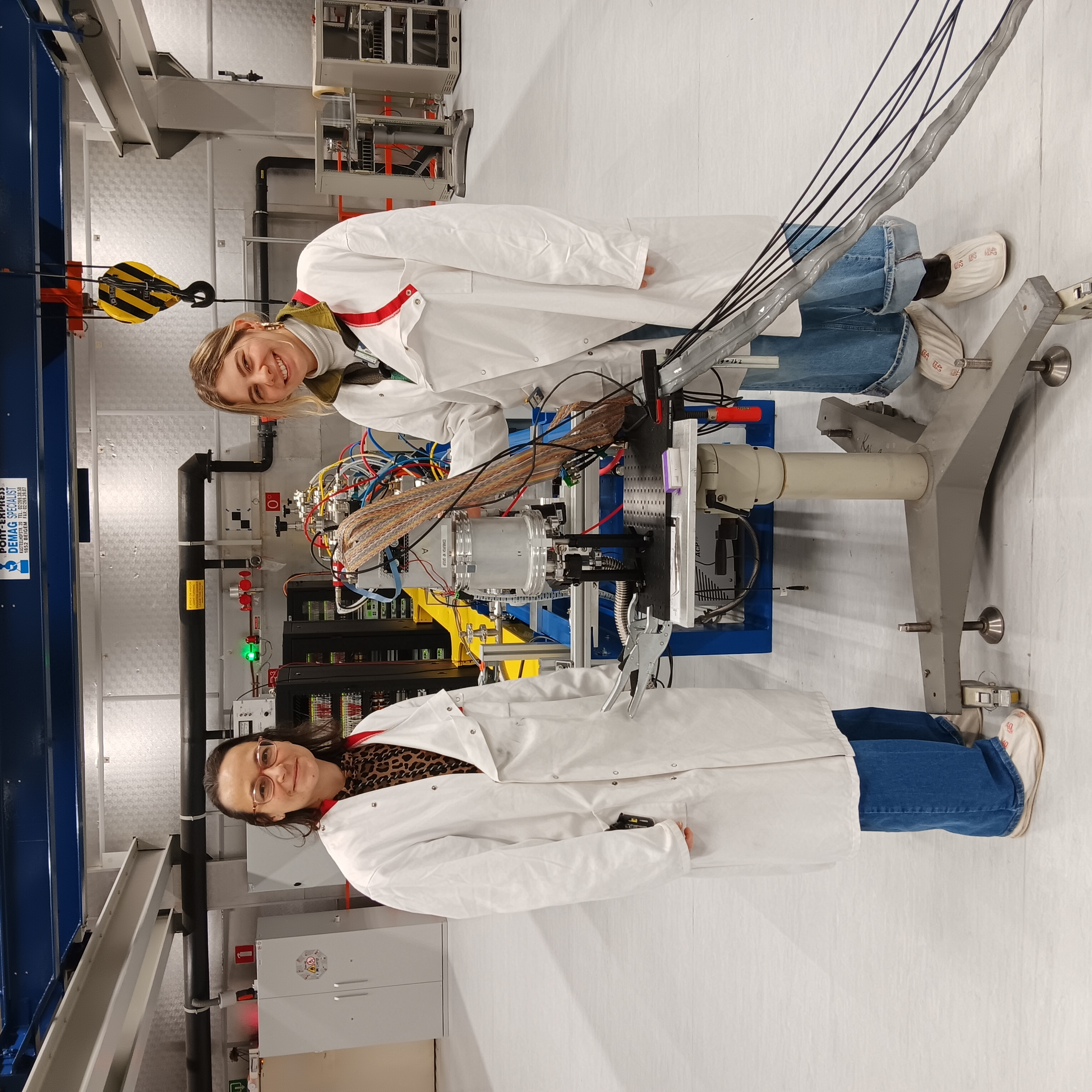
|
|
|
1
|
Mon Jan 26 11:29:14 2026 |
Claudia | Count rate estimate and particle energies |
Count rate estimate for all reaction measurements planned.
Assumptions:
- Neutron source 7Li(p,n); default setttings.
- Distance of sample to target: 30 cm
- solid angle coverage: 0.4
- areal density of samples very roughly estimated from alpha energy loss measurement from Daresbury
- includes calculation of expected particle energies at 0 and 180 degrees emission.
Conclusions
- All particles at all neutron energies should be stopped in 150 um detector. If one of them breaks, the 100 um detector should be installed at backward angles.
- sufficient counting statistics for few hours running per target.
|
| Attachment 1: kinematics.c
|
#include "../Rootheaders/Root_macros.h"
#include "TRandom.h"


float radcon=2*3.14159/360;


// REACTION  6Li(n,t)
/*
char *reac="6Li(n,t)";
float m_a=1.0086649; //amu
float m_A=6.0151223; //amu
float m_B=4.0026032; //amu
float m_b= 3.0160493; //amu
//float m_B=3.0160493; //amu
//float m_b= 4.0026032; //amu
 */

// REACTION  10B(n,a)
/*
char *reac="10B(n,a)";
 float m_a=1.0086649; //amu
 float m_A=10.0129370; //amu
 float m_B=7.016004; //amu
 float m_b= 4.002603; //amu
 */

float Ex=0.0; //Excitation Energy 478


// REACTION  35Cl(n,p)
char *reac="35Cl(n,p)";
 float m_a=1.0086649; //amu
 float m_A=34.968852; //amu
 float m_B=34.9690322; //amu
 float m_b= 1.0078250; //amu


float E_a=3.00; //MeV

float mass_scaler=931.494061; //MeV/c2


void runlist(){

    cout<<reac<<endl;

    float Q=(m_a+m_A-m_b-m_B)*mass_scaler-Ex;
    cout<< " Q value of reaction ="<<Q<<" MeV"<<endl;
    int i=0;

    while(i<=180){

        float angle=float(i);
        float theta_cm=angle*2*3.14159/360;

        i=i+5;

        float term_1=m_a*m_b*E_a;
        float term_2=m_B*(m_b+m_B)*Q+m_B*(m_B+m_b-m_a)*E_a;

        float gamma = sqrt(term_1/term_2);
        //cout<<gamma<<endl;

        float theta=TMath::ACos((gamma+cos(theta_cm))/sqrt(1+gamma*gamma+2*gamma*cos(theta_cm)));

        float terma=(m_B+m_b);
        float termb=-2*sqrt(E_a*m_a*m_b)*cos(theta);
        float termc= - E_a*(m_B-m_a)-Q*m_B;

        float sqrtE_b_1=(-termb+sqrt(termb*termb-4*terma*termc))/2/terma;
        float sqrtE_b_2=(-termb-sqrt(termb*termb-4*terma*termc))/2/terma;
        float E_b_1=0;
        float E_b_2=0;
        float E_B_1=0;
        float E_B_2=0;

        if(sqrtE_b_1>=0){
            E_b_1=sqrtE_b_1*sqrtE_b_1;
            E_B_1=E_a+Q-E_b_1;
        }

        if(sqrtE_b_2>=0){
            E_b_2=sqrtE_b_2*sqrtE_b_2;
            E_B_2=E_a+Q-E_b_2;
        }

        cout<<theta_cm/radcon<<" "<<theta/radcon<<" "<<E_b_1<<" "<<E_B_1<<" "<<E_b_2<<" "<<E_B_2<<endl;
    }

}
|
| Attachment 2: neutron_fluxes.xlsx
|
|
|
7
|
Thu Feb 12 12:18:16 2026 |
CLW | paper |
|
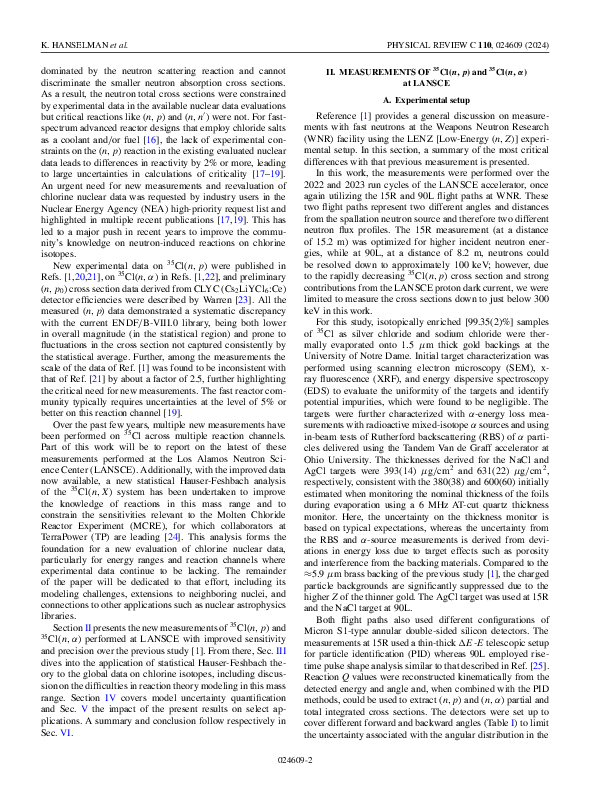
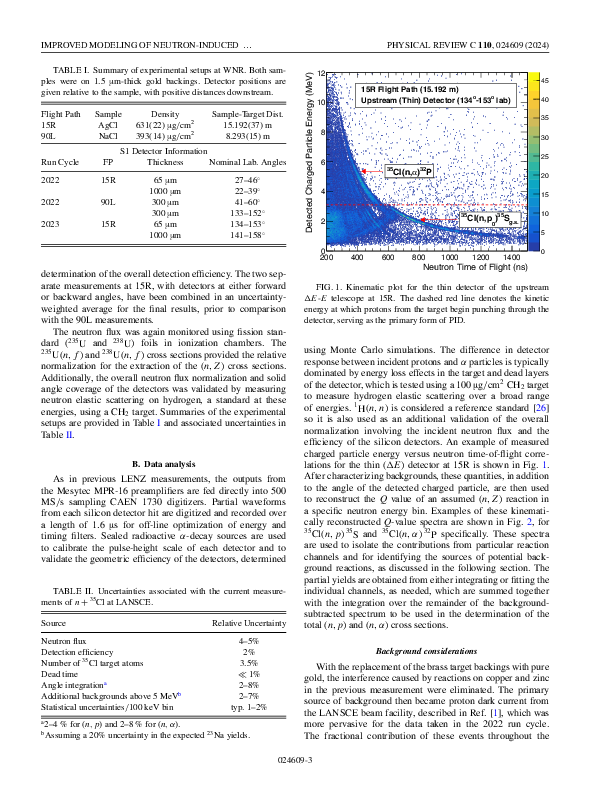
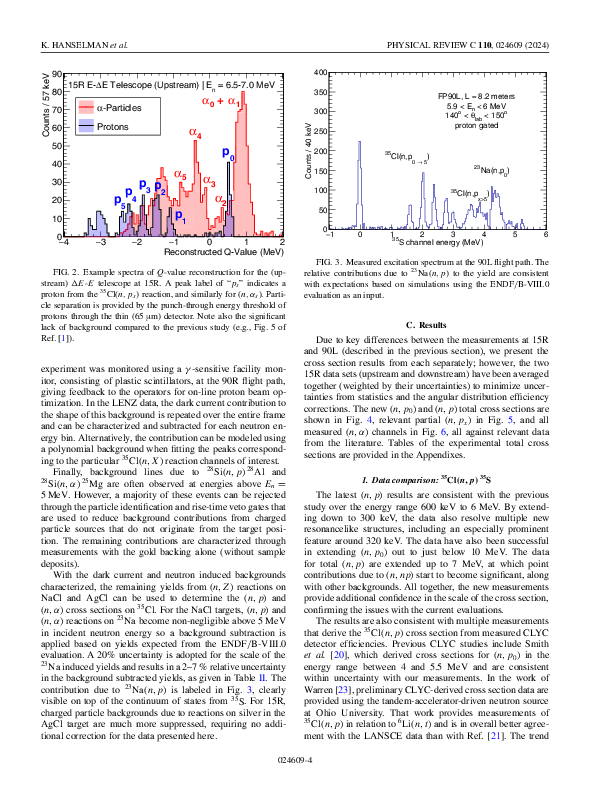
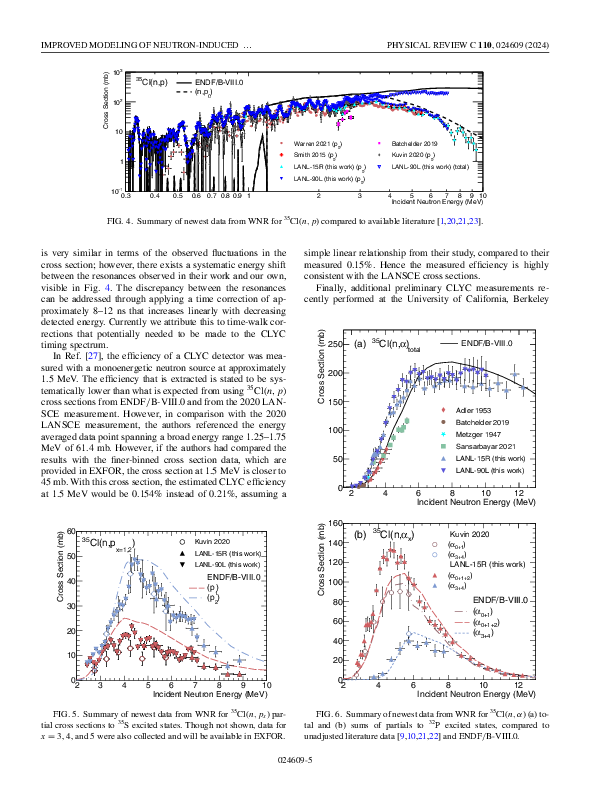
| Attachment 1: Hanselman-2024-Improved-modeling-of-neutron-induce.pdf
|
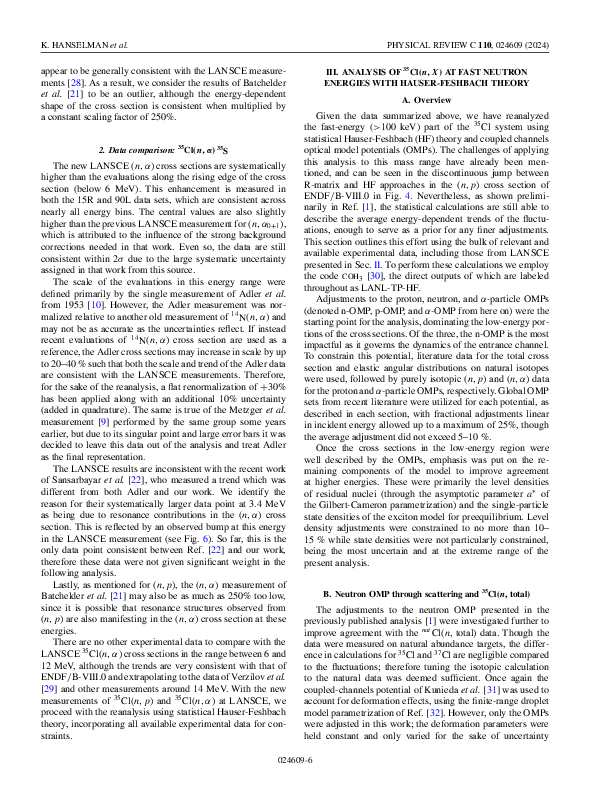
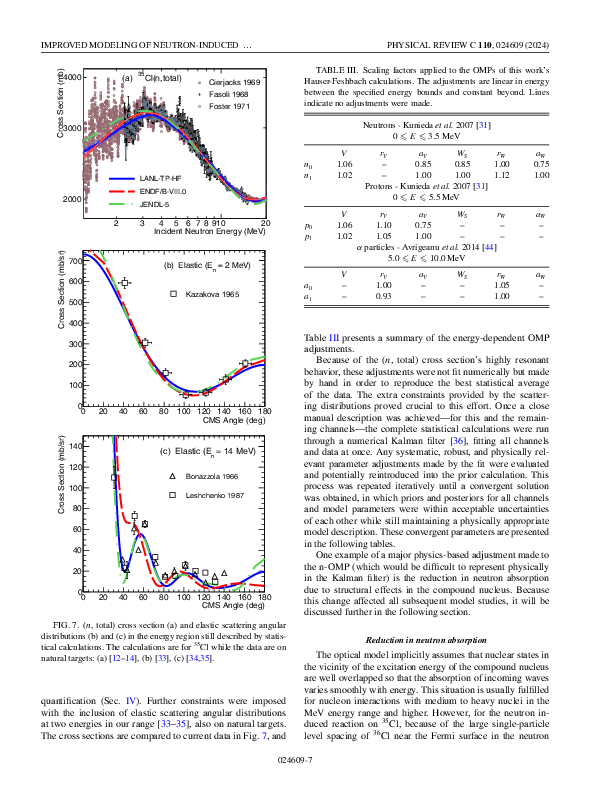
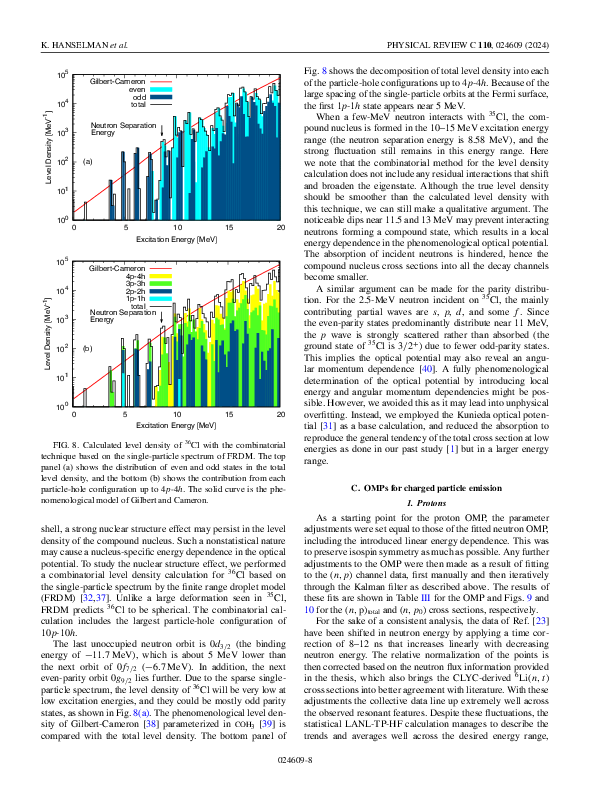
|
|
|
16
|
Mon Mar 2 09:47:13 2026 |
CLW | Clock Synchronisation Edinburgh PC , Geel monitor PC |
T=0: Edinburgh Time 9:39:00
T=1:40: Geel Time 10:37:00
--> T_diff Geel - Edinburgh = 10:35:20 - 9:39:00 = 56:20 |
|
|
17
|
Mon Mar 2 10:38:42 2026 |
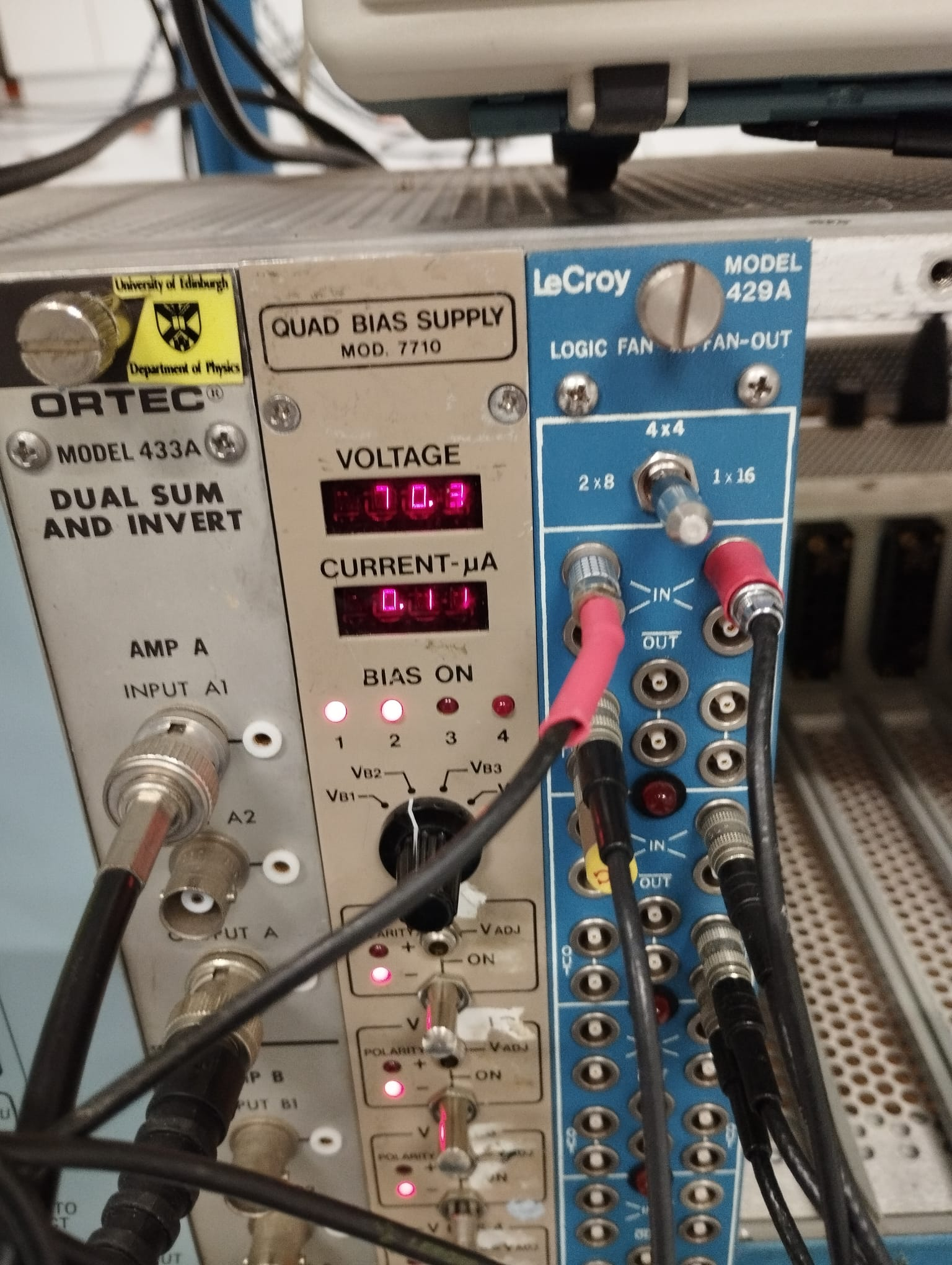
CLW | detector voltage change before Run 55 |
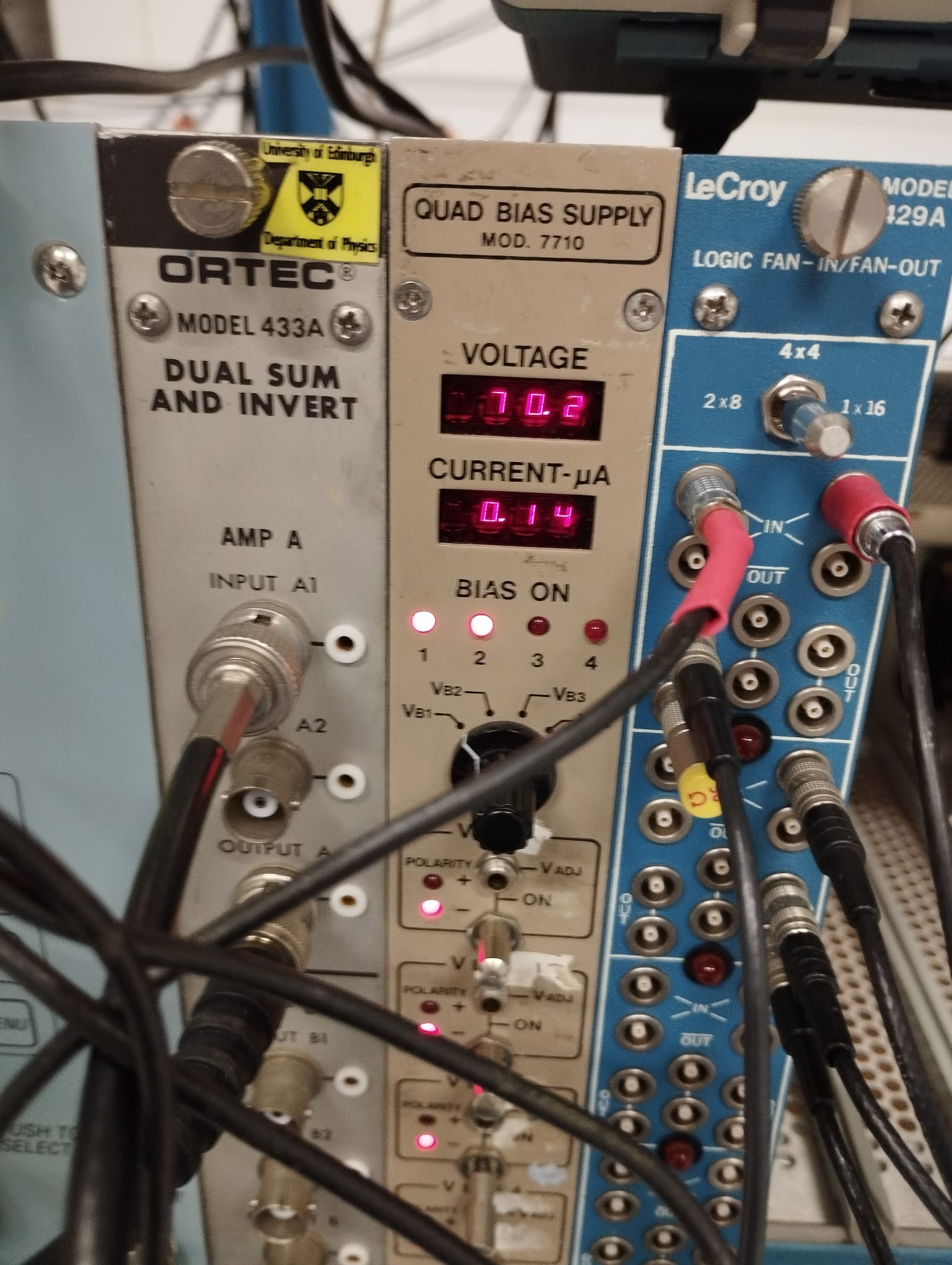
preamp B detector (DSSSD 2) on 100 V, DSSSD 1 still on 70 |
|
|
26
|
Wed Mar 4 11:00:57 2026 |
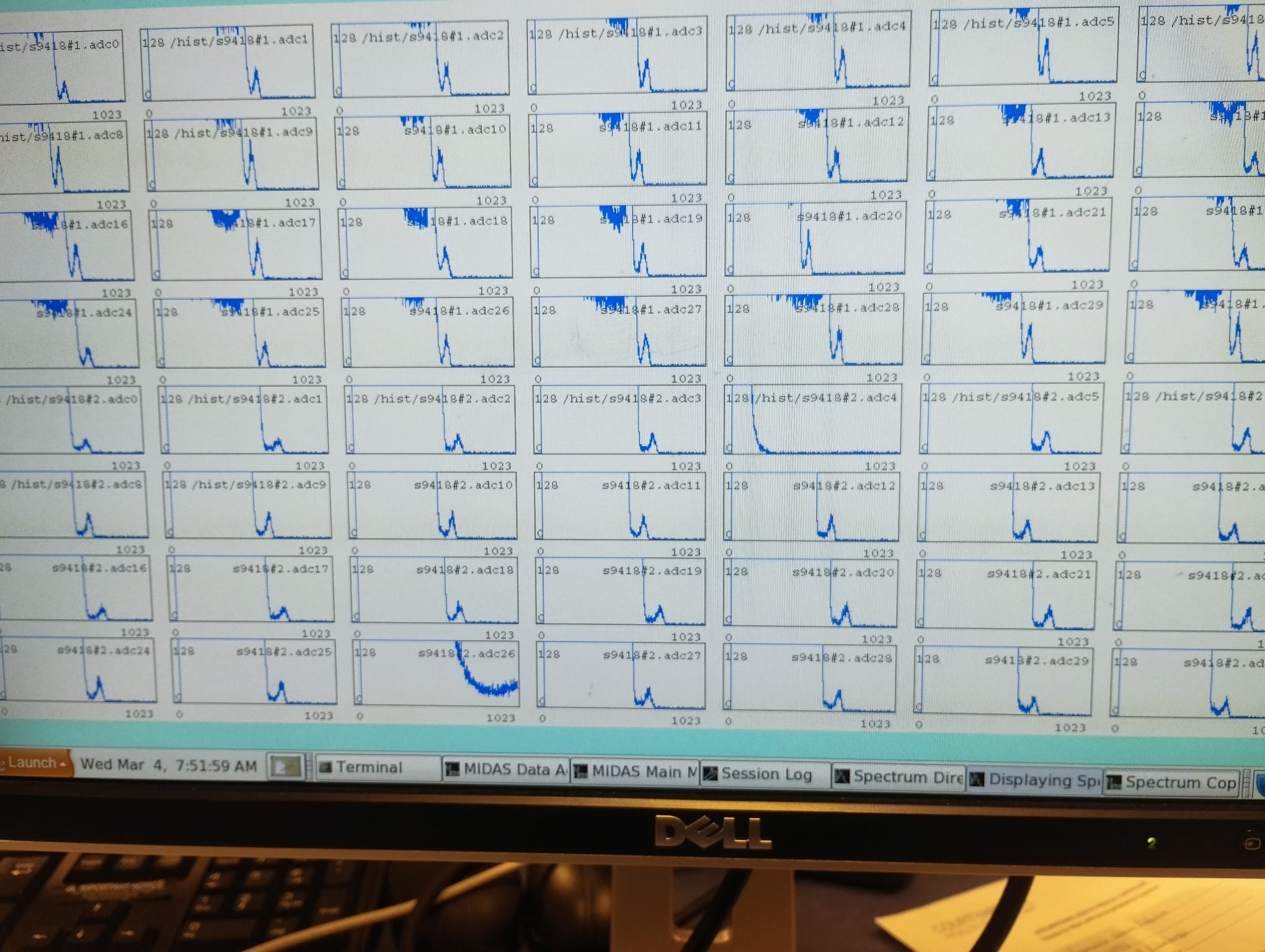
CLW | 35Cl(n,p) proton peak, run with 3 MeV neutrons over night |
Plot from Fran showing peak around expected proton energy in both detectors. Top half are strips of detector placed at 180degrees wrt neutron beam, bottom half 0 degrees. Hence, proton peak from bottom half should be at slightly higher energy.
|
| Attachment 1: Cl35_Proton_Peak.png
|
|
|
|
18
|
Mon Mar 2 10:39:30 2026 |
SW, TD, SB, CLW | Detector SetUp. First Configuration |
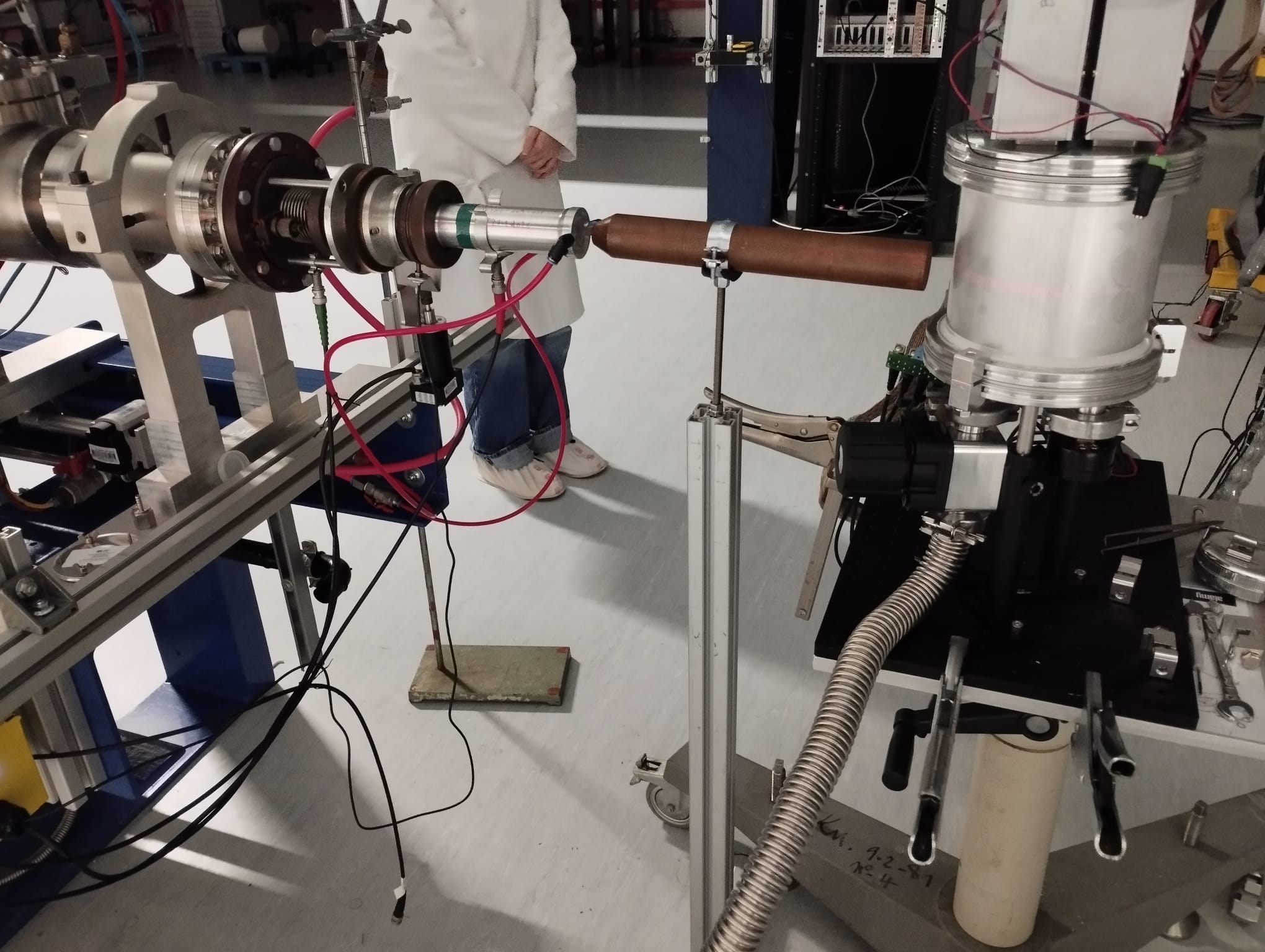
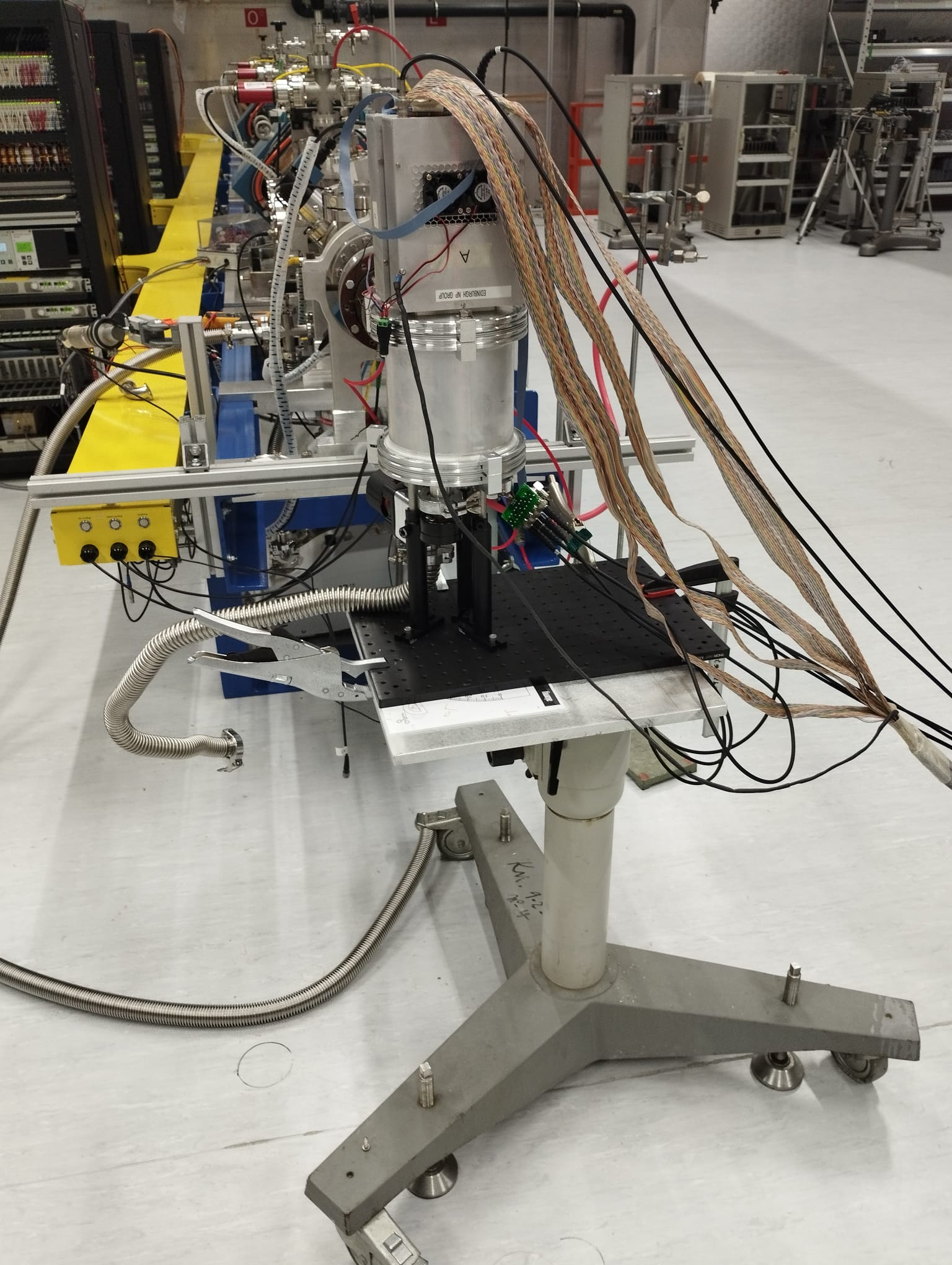
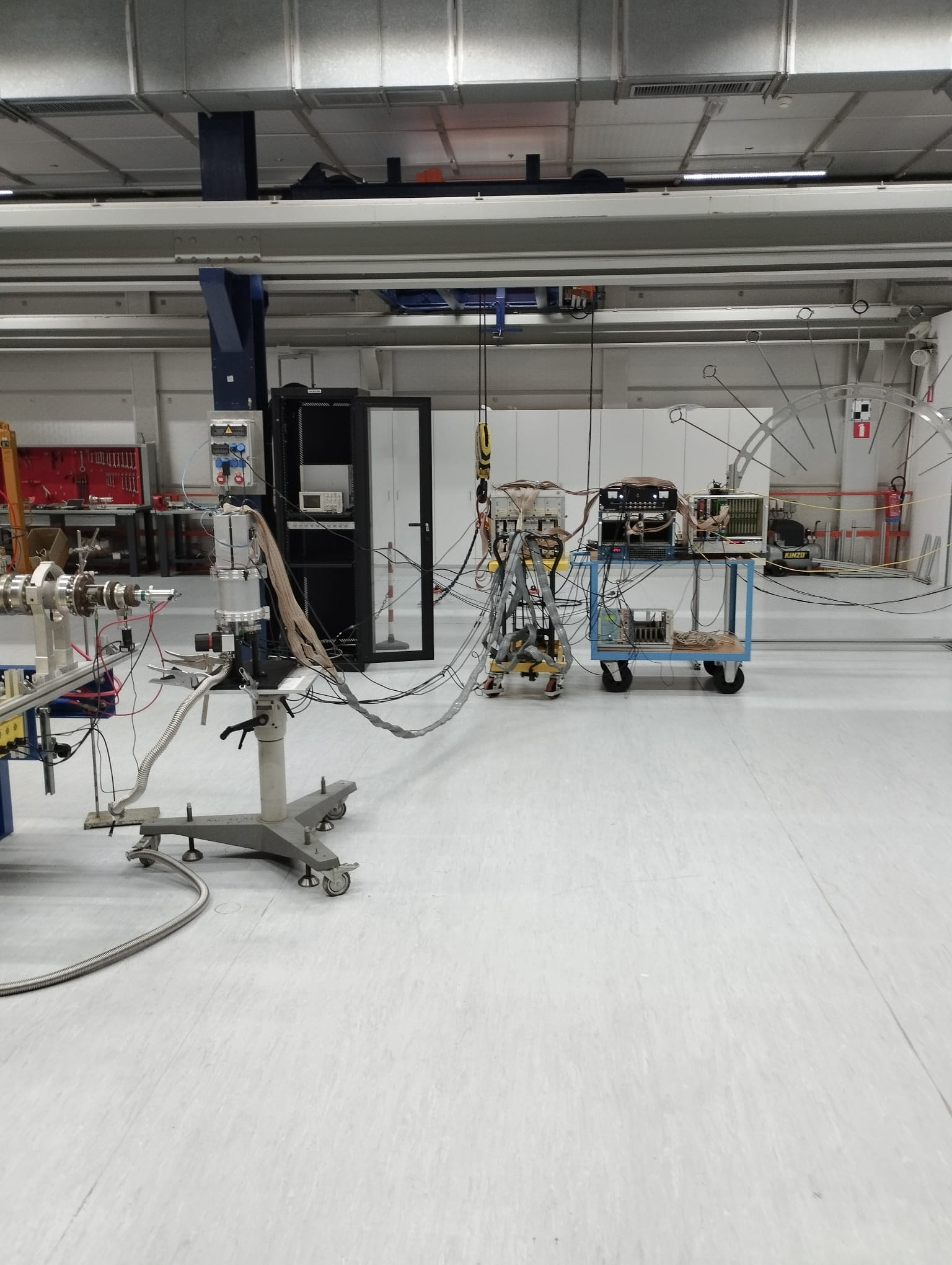
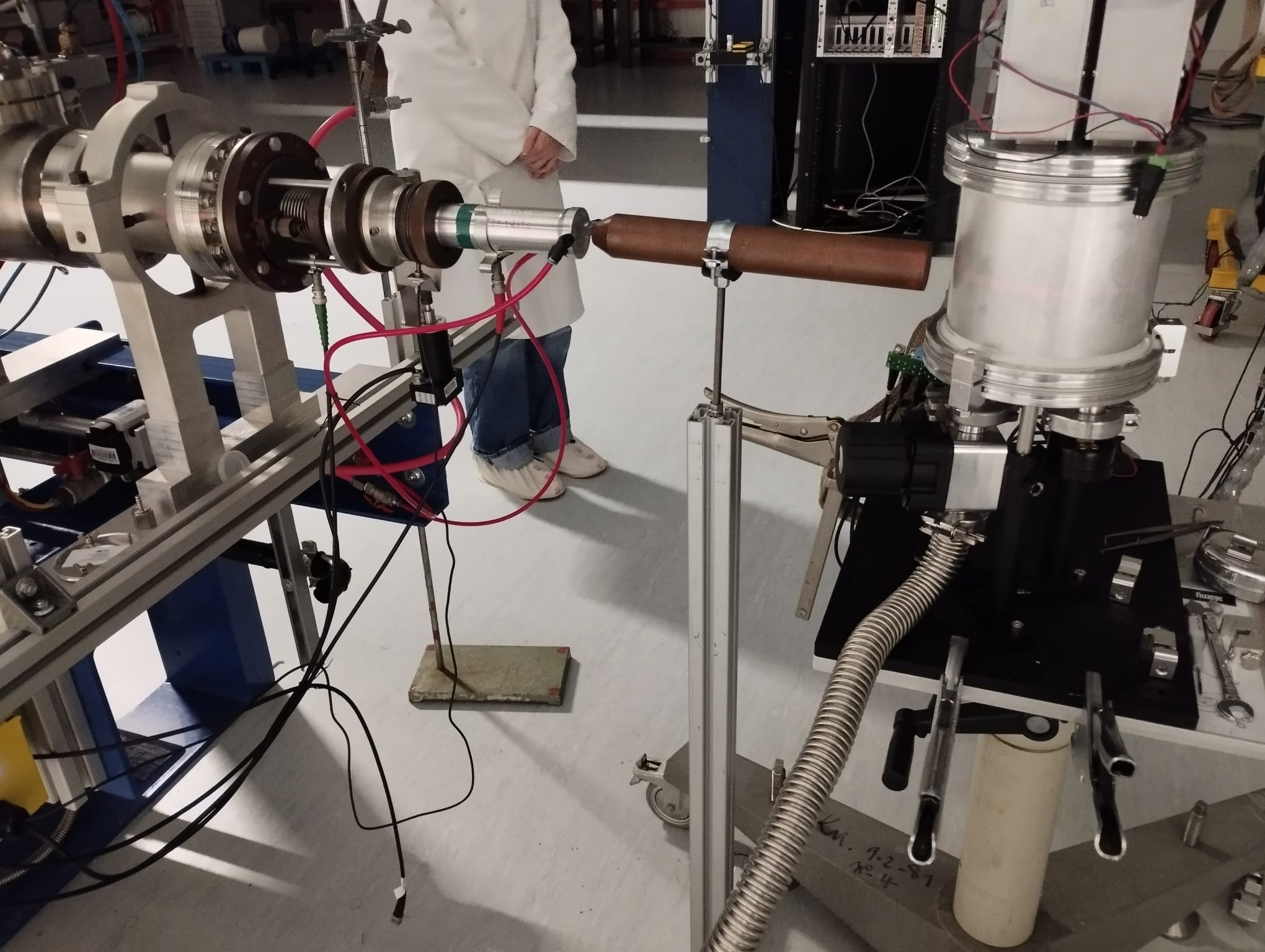
The first sample on beam is the NaCl target #4. The shado cone was placed between the LiF target and the chamber.
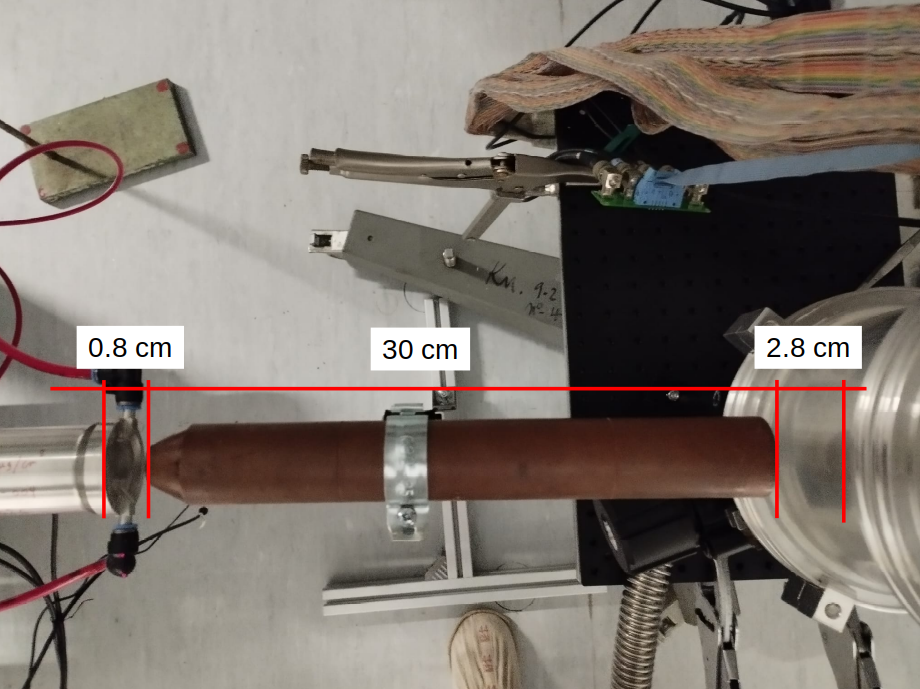
The shadow cone was a cupper cilinder of 4cm diameter and 30 cm lenght, placed at 0.8 cm from the LiF target and 2.8 cm from the chamber. See first figure 1.
Therefore, the diameter of the chamber is 15cm. The sample (considering the center of the chamber as 0) it's place 1 mm misalignt farther from the beam. So, the distance between the LiF target and the sample is 41.2cm.
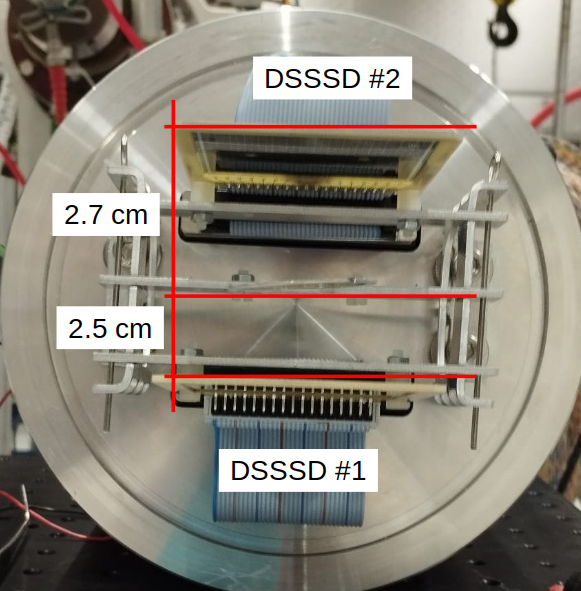
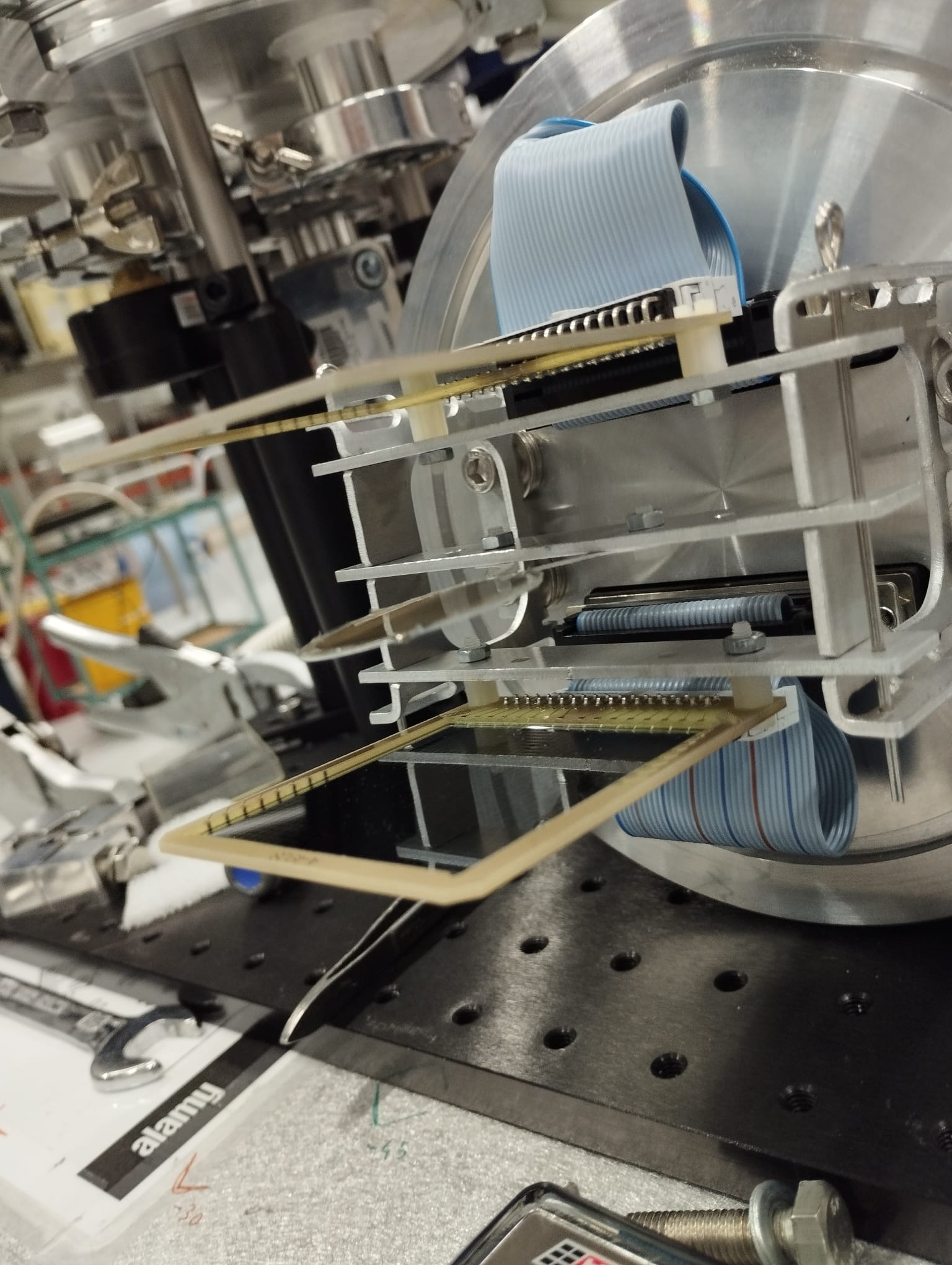
On the other hand, the distance between detectors is 5.2cm, and the sample is closer to the upstream detector. So, the sample is at 2.5cm from DSSSD #2 (Preamp B) and at 2.5cm from DSSSD #1 (Preamp A). See Figure 2.
DSSSD 2 goes to ADC9419 1; DSSSD 1 goes to ADC9418 2;
Au layer faces DSSSD 1. NaCl target 4.
Both detectors were setup at 70V on Friday 27th of February.
|
| Attachment 1: Shadow_Cone_Distances.png
|
|
| Attachment 2: Sample_Detector_Front_Distance.png
|
|
| Attachment 3: Shadow_Cone_Side_2.jpeg
|
|
| Attachment 4: SetUp_Bunker.jpeg
|
|
| Attachment 5: Full_SetUp_Bunker.jpeg
|
|
| Attachment 6: Shadow_Cone_Side_2.jpeg
|
|
| Attachment 7: Sample_Detector_Side.jpeg
|
|
| Attachment 8: Voltage_DSSSD_1.jpeg
|
|
| Attachment 9: Voltage_DSSSD_2.jpeg
|
|